

Porter five forces model
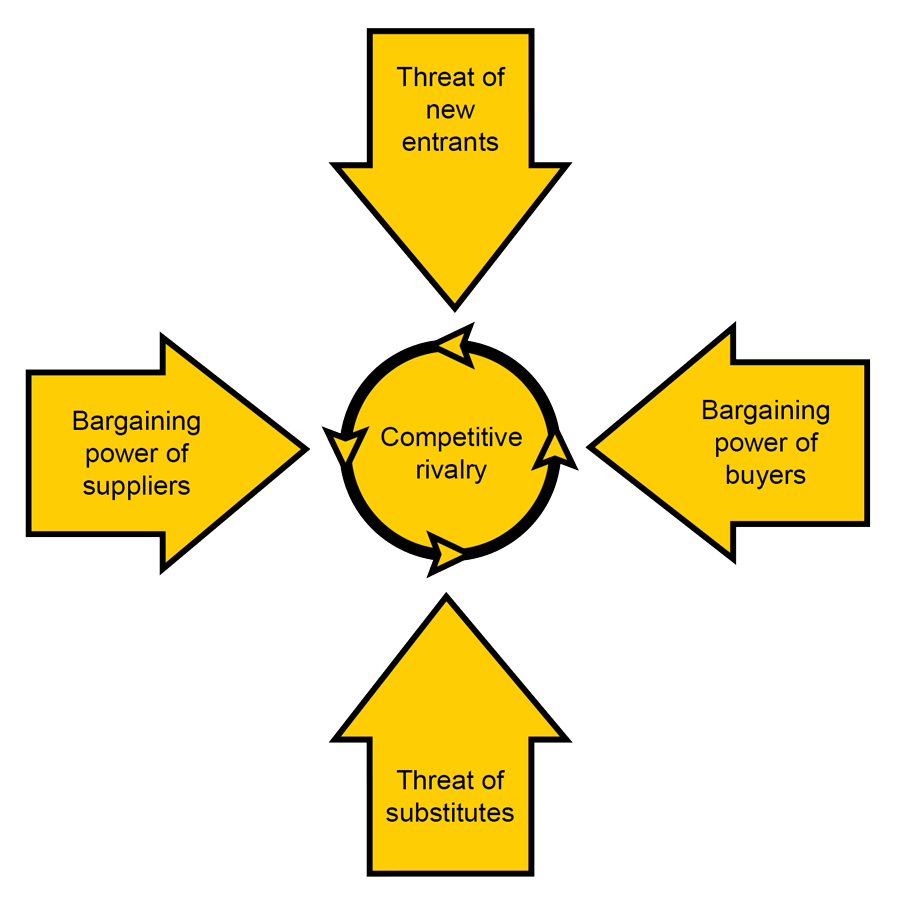
The Porter five forces model is a powerful strategic tool used to analyze the attractiveness of an industry and assess the competitive position of organizations. Developed by Michael E. Porter, this model provides a structured framework for understanding the competitive dynamics and profitability of an industry. The Porter five forces model examines five key forces influencing competition within an industry: the threat of new entrants, the bargaining power of suppliers, the bargaining power of buyers, the threat of substitutes, and the intensity of rivalry among existing competitors.
When should you use the Porter five forces model ?
The Porter five forces model is a framework used to analyze the competitive forces within an industry or market. This model can be used in various situations and contexts, and is particularly valuable for organizations making strategic decisions. The applicability of the model extends beyond specific sectors, allowing its use in various contexts. Whether assessing competitive positioning, fine-tuning pricing strategies, or venturing into new markets, the Porter five forces model offers a systematic framework for strategic decision-making.
Why use the Porter five forces model ?
The use of the Porter five forces model offers several benefits for businesses and organizations:
- Strategic planning: The model provides organizations with a structured method to analyze the external environment and develop strategies that consider competitive forces. This analysis helps companies better understand how to compete and position themselves in their market environment.
- Competitive analysis: The model aids in identifying forces influencing competition in a specific industry or market, allowing businesses to recognize potential threats and opportunities, better preparing them for competitive pressures.
- Risk management: By understanding competitive forces, businesses can identify potential risks and prepare for them. This can range from price competition to the threat of new entrants or substitutes.
- Decision-making: The model offers insight into market dynamics and assists in making informed decisions in areas such as: product development, pricing, distribution, and other strategic aspects.
- Identification of growth opportunities: By understanding the forces influencing the market, businesses can also identify growth opportunities. They can focus their strategies on areas where competition is less intense or where they have unique advantages.
Overall, the Porter five forces model enables organizations to gain in-depth insights into competitive dynamics, helping them develop more effective strategies to survive and thrive in their market environment.
How does the Porter five forces model work ?
The Porter five forces model analyzes the competitive forces in a specific industry or market by identifying five forces. These five forces are:
- Threat of new entrants (new competitors):
- Entry barriers: Organizations need to identify barriers that could deter new entrants, such as: high capital costs, economies of scale, customer brand loyalty, patents, regulations, or access to distribution channels.
- Existing competition: The more existing competition, the less attractive the market is to new entrants.
- Bargaining power of suppliers:
- Number and concentration of suppliers: If there are few suppliers or if they are concentrated, they have more bargaining power.
- Availability of substitutes: If there are few alternatives for the provided goods or services, suppliers have more power.
- Switching costs: High switching costs to change suppliers can increase the bargaining power of suppliers.
- Bargaining power of buyers (customers):
- Number and concentration of buyers: If there are few buyers or if they are concentrated, they have more bargaining power.
- Availability of information: The more information buyers have about products and prices, the greater their bargaining power.
- Availability of substitutes: If many alternatives are available, buyers have more choices and bargaining power.
- Threat of substitutes:
- Availability of substitutes: If many alternatives meet the same needs, it can reduce the industry’s attractiveness.
- Price-performance ratio of substitutes: If substitutes offer similar performance at a lower price, they can pose a threat.
- Intensity of rivalry among existing competitors:
- Number of competitors: A high number of competitors often increases rivalry.
- Differentiation: If products or services are strongly differentiated, it can reduce rivalry.
- Exit costs: High exit costs, such as: investments in specific assets, can keep companies in the industry, increasing rivalry.
By analyzing these five forces, organizations can gain insights into the dynamics of their industry and develop strategies to strengthen their competitive position. The model helps identify opportunities and threats, allowing organizations to better anticipate changes in their external environment.
Example of the Porter five forces model
Below is an example of the porter five forces model applied to the aviation industry:
- Threat of new entrants:
- High capital investments: The aviation industry requires significant capital investments for: aircrafts, maintenance facilities, and safety measures. This represents a significant barrier for new entrants.
- Regulatory barriers: Strict regulations and certification requirements form a barrier for new entrants.
- Brand recognition: Existing airlines often benefit from brand preference and trust, making it challenging for new players to gain market share.
- Bargaining power of suppliers:
- Limited aircraft manufacturers: The aviation industry heavily depends on a limited number of aircraft manufacturers, such as: Boeing and Airbus. This enhances the bargaining power of suppliers.
- High costs of switching: Changing aircraft suppliers involves substantial costs, reducing bargaining power for airlines.
- Bargaining power of buyers (customers):
- Abundance of consumer choices: Travelers typically have numerous options when choosing airlines.
- Price sensitivity: Customers are often price-sensitive and comparing fares. This puts pressure on airline profit margins.
- Access to information: Increased internet access allows consumers to be well-informed, facilitating comparisons of fares and services.
- Threat of substitutes:
- Alternative modes of transportation: Trains, buses, and cars can serve as substitutes for air travel, particularly for short distances.
- Virtual meetings: In certain business scenarios, virtual meetings can substitute for business travel, potentially reducing demand for air travel.
- Intensity of competition:
- Overcapacity: The aviation industry frequently faces overcapacity, leading to price pressure and lower profit margins.
- Strong competition on key routes: Popular routes may experience intense competition among airlines, impacting profitability.
This example illustrates how the Porter five forces Model can be applied to the aviation industry, providing insights into the dynamics and competitive forces influencing the profitability of players in this sector.
