

Business model canvas
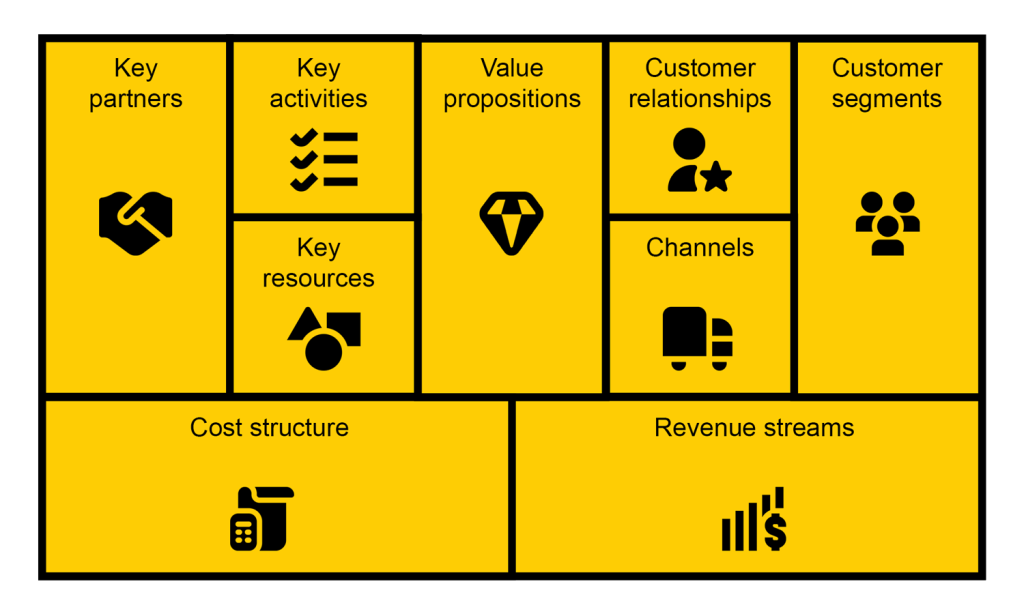
The Business model canvas is a strategic management tool used to describe and analyze the business models of organizations in a structured and visual manner. It was introduced by Alexander Osterwalder and Yves Pigneur in their book “Business Model Generation”. The canvas consists of nine building blocks that together provide a complete and comprehensive view of the business model. It is a valuable instrument for designing, describing, evaluating, and innovating business models.
When should you use the business model canvas ?
The Business model canvas is a versatile tool that can be effectively applied in various business contexts. It is used in the development, revision, and optimization of business models. It assists new organizations in designing and structuring their business model, while existing companies can use the model to analyze and revise their current business model. Additionally, it provides insight into the impact of introducing new products or services on the existing business model and any necessary adjustments. Overall, it offers a structured approach to mapping and understanding various aspects of a business. This helps organizations and managers visualize and communicate the business concept, and identify opportunities for growth and efficiency. With its visual overview of different elements of the business model, it is also useful for strategic decision-making.
Why use the business model canvas ?
The use of the Business model canvas can provide several benefits for organizations and entrepreneurs. Here are some reasons why the model is useful:
- Overview and visualization: The canvas offers a structured and visual way to represent key elements of business models. This makes complex information more accessible and easier to understand.
- Simple communication: The model allows the essence of a business model to be displayed on one page. This makes it easier to share and discuss with others.
- Strategy development: The canvas aids in formulating and developing a clear strategy by helping people to understand the relationships between different elements of the business model. This enables organizations to focus on core aspects of the business.
- Promotion of innovation: It stimulates innovation by encouraging organizations to think critically about the business model and explore opportunities to create value in new ways.
- Quick adaptation: The use of the business model canvas makes it easier to visualize and plan changes in the business model. This enables organizations to respond quickly to changes in the market, technology, or other external factors.
- Focus on customer value: The canvas encourages a focus on value creation for the customer. By emphasizing the value proposition and customer segments, it helps organizations develop products or services that actually meet customer needs.
- Facilitation of collaboration: The canvas acts as a common reference point for teams within an organization. It promotes communication and collaboration by allowing all stakeholders to have a shared understanding of the different aspects of the business model. In addition, teams can work together to complete and improve the model.
Overall, the business model canvas provides a structured approach to understanding, developing and communicating business models. This makes it a valuable tool for companies and managers.
How does the business model canvas work ?
The Business model canvas is composed of nine building blocks that together form a complete picture of a business model. Below, the nine building blocks of this model are briefly described.
- Key partners: Consider with whom the organization can form partnerships to strengthen the business model. Partnerships can range from suppliers and distribution partners to strategic alliances that add extra value to your offering.
- Key activities: Define the core activities needed to operate the organization. This can range from production processes and marketing activities to research and development efforts. Identifying these activities helps streamline business processes.
- Key resources: Identify the critical resources needed to support the business model. This includes physical resources, such as: facilities and technology. In addition, it also includes intangible resources, such as: intellectual property and human capital.
- Value propositions: The value proposition defines the benefits and unique features that make the organization’s products or services appealing to customers. It is essential to understand the specific problems or needs of customer segments and develop a value proposition that addresses them.
- Customer relationships: Determine how the organization wants to communicate and engage with customers. The nature of customer relationships can vary from personal interactions to automated support systems. The goal is to promote customer loyalty and provide a positive customer experience.
- Channels: This refers to the ways in which the organization delivers products or services to customers. This can include both physical and digital channels, such as: direct sales, online platforms, or distribution networks. The choice of channels is crucial for reaching customer segments in the most effective way.
- Customer segments: This building block involves understanding the different groups of people or companies that could purchase the organization’s products or services. The needs, desires, and characteristics of these groups need to be identified. Companies can focus on a specific segment with tailored offerings or serve multiple customer segments with diverse value propositions.
- Cost structure: All costs related to the business model need to be mapped out, including both fixed and variable costs. This can include costs, such as: personnel, operational expenses, and marketing costs. A clear understanding of the cost structure helps manage resources efficiently and optimize profitability.
- Revenue streams: Here, organizations need to define the ways in which they earn or intend to earn money. This can include various methods, such as: selling products, subscription models, licensing fees, or other revenue streams. It is important for organizations to understand how value translates into revenue.
To use the Business model canvas, each building block needs to be filled in with specific information about the organization. Filling out the canvas creates a clear overview of the business model. It is important to realize that it is a dynamic tool that can be adjusted as the organization changes or evolves.
Example of the business model canvas
Below is a simplified example of the Business model canvas applied to a fictional company offering healthy meal boxes.
- Key partners:
- Delivery partners for nationwide coverage.
- Direct collaboration with local farmers and organic producers.
- Exclusive partnerships with fitness instructors and nutritionists for joint promotions.
- Marketing partnerships with influencers and bloggers in the health and nutrition industry.
- Key activities:
- Research and development of new recipes and menu options.
- Continuous optimization of logistics processes for efficient deliveries.
- Marketing campaigns focused on seasonal trends and health awareness.
- Key resources:
- Talented chefs with expertise in various culinary styles.
- Nutritionists to ensure healthy and balanced meals.
- Advanced technology for order processing, inventory management, and customer interaction.
- Value propositions:
- Healthy and balanced meals with clear nutritional information.
- Customizable menu options for specific dietary needs with the ability to change weekly.
- Environmentally conscious by using sustainable packaging and collaborating with local farmers.
- Customer relationships:
- Active customer service with real-time support via phone, email, and chat.
- Loyalty program and special discounts for returning customers.
- Customer-centric approach with personalized recommendations based on dietary preferences.
- Channels:
- User-friendly website with an intuitive interface for orders and subscriptions.
- Mobile app with notifications about deliveries and new menu options.
- Collaboration with well-known delivery services and own delivery fleet for flexibility.
- Customer segments:
- Main customers: Busy families with young children, working professionals with little time to cook.
- Niche customers: Fitness enthusiasts, individuals with specific dietary needs such as keto or vegan.
- Cost structure:
- Personnel costs for chefs, nutritionists, delivery personnel, and customer service staff.
- Purchase costs for fresh ingredients and sustainable packaging.
- Technology investments for maintaining and upgrading online platforms.
- Revenue streams:
- Monthly subscription fees based on chosen meal plans.
- Additional revenue from the sale of exclusive products, such as: cookbooks or kitchen gadgets.
- Partnerships with health and wellness companies for shared revenue.
This example illustrates how the Business Model Canvas can be applied to a business offering healthy meal boxes. It helps identify the key elements of the business model and how they relate to each other to deliver value to customers and generate sustainable revenue.
